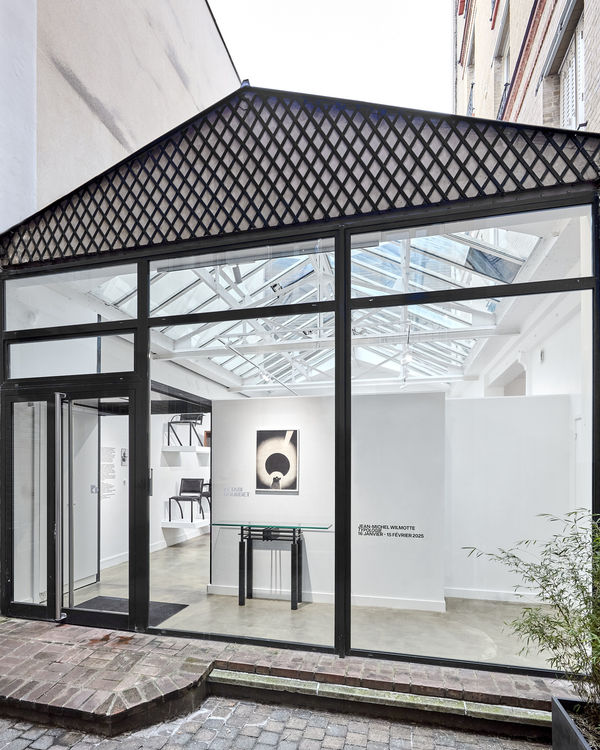
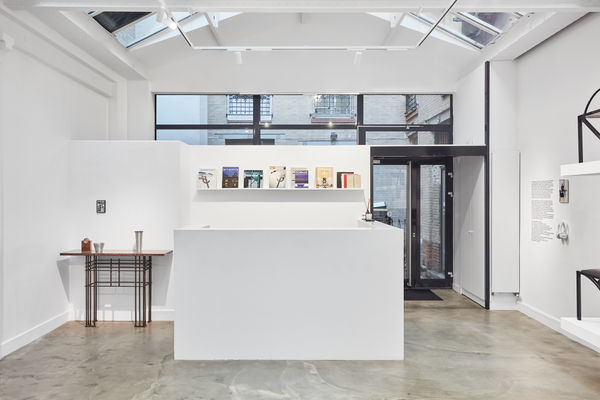
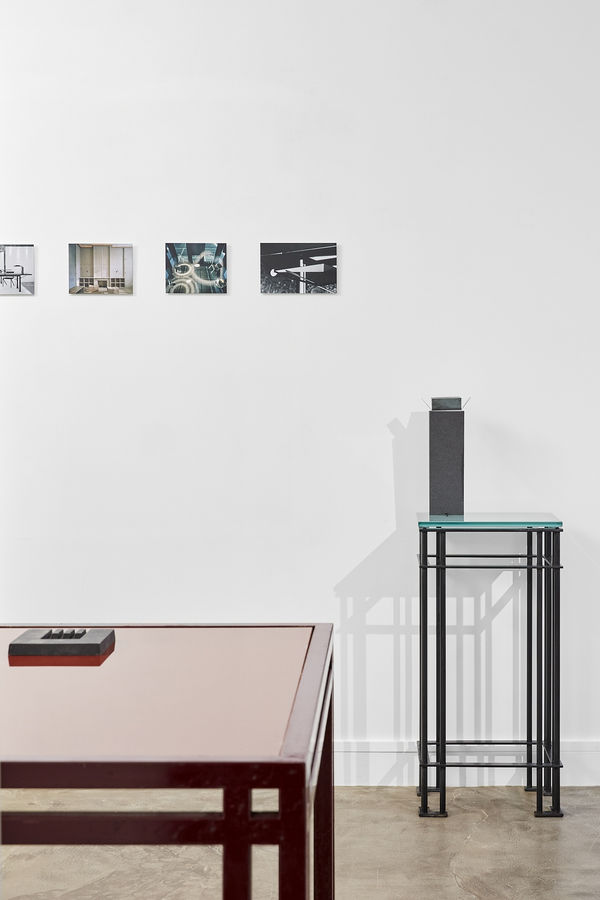
Typologie: Ketabi Bourdet - 22, passage Dauphine 75006 Paris

When I mention Jean-Michel Wilmotte as a designer, the response is invariably: ‘But Wilmotte is an architect!’ Well, yes, but not only... Fifty years after the creation of his first piece of furniture, it seems more urgent than ever to rediscover Wilmotte the designer. Which is what he was from the very beginning.
When I mention designer Jean-Michel Wilmotte, the response is always the same: “Well, Wilmotte is an architect!” Well, yes, but not only. 50 years after the creation of his first piece of furniture, it seems urgent to rediscover Wilmotte as a designer. He studied at Camondo, where he entered in 1969, the same year as Elizabeth Garouste and Philippe Starck. His teachers were Etienne Fermigier, Michel Mortier and Marcel Gascoin. From this training he retained a certain rigor, the right line. He says of his furniture: “My furniture comprises of objects whose silhouettes reveal the line of my pencil.” It's no coincidence that in 1991 he set up his agency in the heart of Faubourg Saint Antoine, historically the center of the Parisian furniture industry. He is always in a hurry and is afraid of the time taken by architecture - a field in which it can take years between the first sketches and the delivery of a building - and prefers the time taken by design, where in just one week his drawings take shape to become a chair, a table or a lamp.
In 1976, Wilmotte founded Academy, his own furniture company, alongside Governor, his interior design agency. In 1977, he opened the first shop at 28 rue Madame in Paris. In 1982, Academy moved to its now legendary gallery on Place de l'Odéon. From the late 70s onwards, Academy developed a range of contemporary, understated furniture. Not completely embracing the prevailing postmodernism, he kept an eye on history. With its architectural inspiration, his furniture is reminiscent of ancient Greece as much as Japanese temples. His neoclassical style gives to his furniture a radical aesthetic full of references to previous centuries’ Decorative Arts. His furniture, produced in small series, is also distinguished by the quality of its craftsmanship.
In 1979, he joined the VIA adventure alongside Jean-Claude Maugirard, thanks to whom he exhibited all over the world, from Japan to the Milan Furniture Fair or the London department store Harrods. From 1982, VIA also enabled him to develop the Attila collection, inspired by the railings of the Luxembourg Gardens, alternating flat sections of metal and tubes. In 1988, he was awarded a Carte Blanche which gave birth to the Palmer collection, named after an ancient measuring tool.
While deploying a minimalist aesthetic, Wilmotte brought traditional techniques up to date, adapting them to the means of the era. The Attila collection, for example, took its name from the technique used to create a rusty patina on the metal. Using acid, the craftsman rusted the metal in his garden, then fixed the rust with Rustol, making the grass no longer grow back as it would after the passage of Attila the Hun and his troops. For the oak used for the Elysée Palace furniture, white paint was applied to the wood, then immediately wiped off with a cloth to simulate the ceruse effect.
From 1982 onwards, Jean-Michel Wilmotte benefited from the government's desire, under the impulse of Jack Lang, then Minister of Culture, to develop France's creative industries. He was involved in all the major commissions, starting with the Elysée Palace in 1983, where he designed the furniture for President François Mitterrand's bedroom. In 1984, he won the competition for the office of the French ambassador in Washington. That same year, he designed the furniture for Jack Lang's office, which was eventually moved to the Ministry of Education. He also designed the chair for the gardens of the Palais Royal in 1986. In addition to public commissions, Wilmotte also designed furniture for a number of corporate headquarters, including Canal +, Havas and Casino. His solid furniture, anchored to the ground and made from noble materials, embodies both private and public power.
Jean-Michel Wilmotte is also an art lover and collector, collaborating with numerous artists such as César, Daniel Buren or Jean-Pierre Raynaud, notably in 1993 for the Café Richelieu at the Louvre Museum. As part of the new culture of communication that emerged in the '80s, he pays close attention to image. His shoots were signed by renowned photographers such as Robert César and Keiichi Tahara, and give rise to images that transcend simple furniture photography.
In 1986, in addition to a design office, he set up an exhibition space in Tokyo. For the Bunkamura, huge cultural center in Shibuya in Tokyo, Wilmotte designed a replica of famous Parisian café les Deux-Magots adapting the Palais Royal chair to Japanese standards. The adventure was brought to a screeching halt in 1995 by the Kobe earthquake. Feeling that he had done his work in the fields of design and decoration, he started building in Tokyo in 1989. He took his equivalence exam in 1993 and qualified as an architect. From then, architecture took precedence over design and marked the end of Academy.
However, Wilmotte has never ceased to design furniture for private and public projects, either through his own agency or via furniture makers. Six designers are still working full time in his studio. The Palmer, Attila, Washington and Elysée collections are now part of French furniture history, and some have already joined the collections of national museums.
Throughout his career, his work as an interior designer and then as an architect has enabled him to design furniture for complete projects, from the façade to the door handle. This global approach is reminiscent of the work of another Jean-Michel, Jean-Michel Frank.
Although he is now part of the “Academie des Beaux Arts” and considered as one of the great contemporary architects, Jean-Michel Wilmotte's importance in the aesthetic revolution of the 80s is undeniable, and worth discovering or rediscovering today.
-
 Console Elysée
 -
Cendrier
-
Jean-Michel Wilmotte, Vase, Ca. 1993
-
Horloge de table
-
Prototype Chaise Sullivan 2
-
Paire de chenets Firedog
-
Console Attila
-
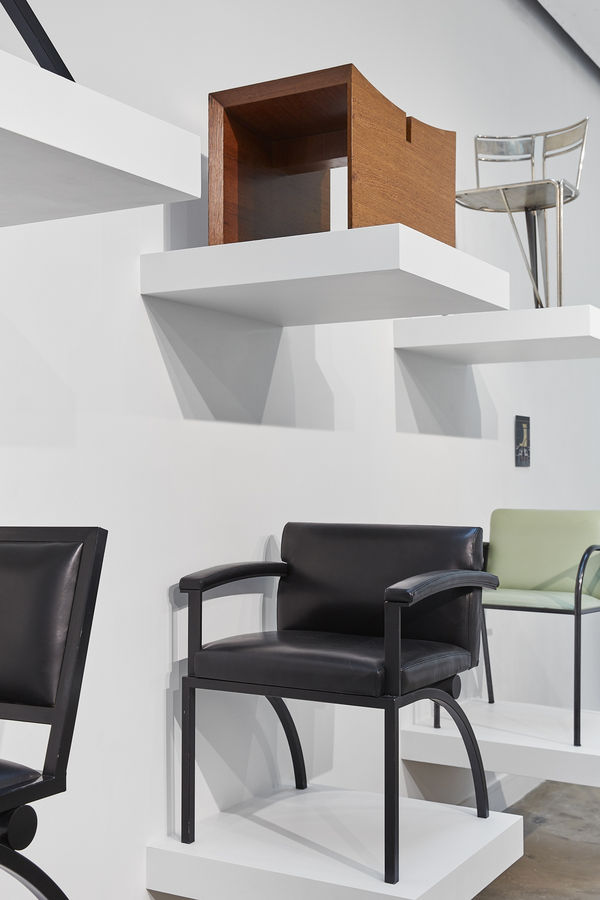
Jean-Michel Wilmotte, Tabouret Elysée, Ca. 1983
-
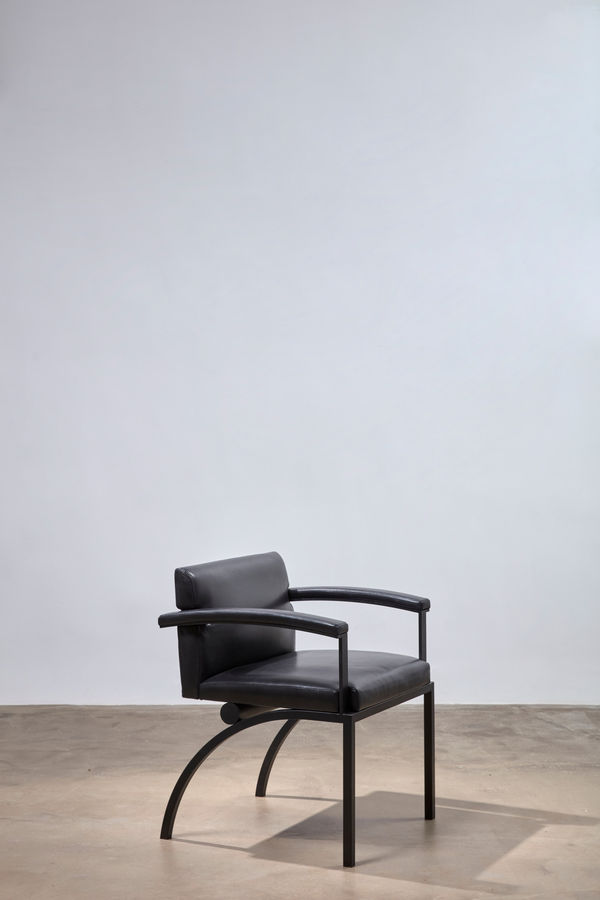
Paire de fauteuils Washington
-
Jean-Michel Wilmotte, Commode Palmer à un tiroir, Ca. 1988
-
Fauteuil BR 255
-
Bureau Swann
-
Table Nessus
-
Fauteuil BR 255
-
Paire de fauteuils Washington
-
Console Attila
-
Commode Palmer à deux tiroirs
-
Chaise Compas
-
Jean-Michel Wilmotte, Fauteuil visiteur Washington, Ca. 1984
-
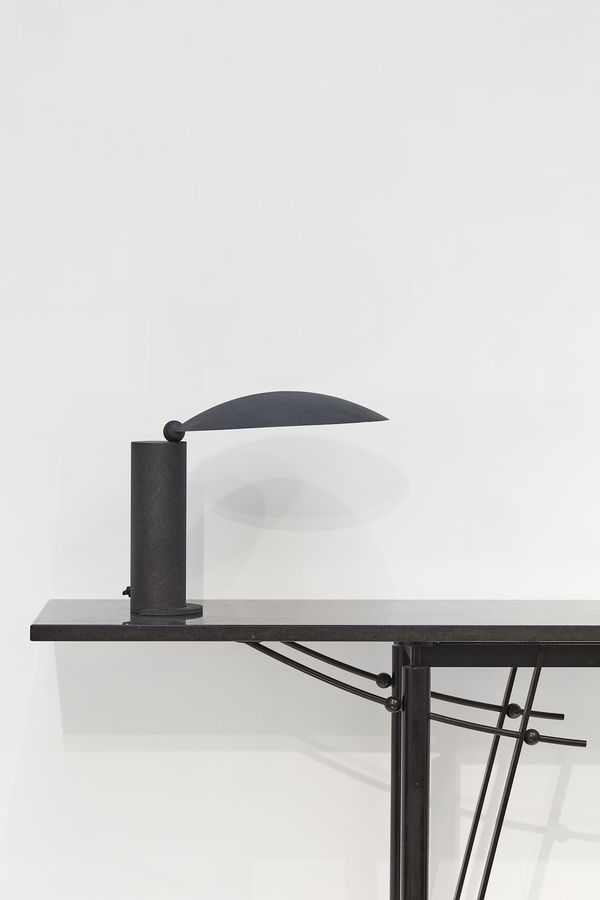
Console Washington
-
Chaise Cylindre
-
Jean-Michel Wilmotte, Table basse Étalon, Ca. 1987
-
Jean-Michel Wilmotte, Commode Palmer à un tiroir, Ca. 1988