
Overview

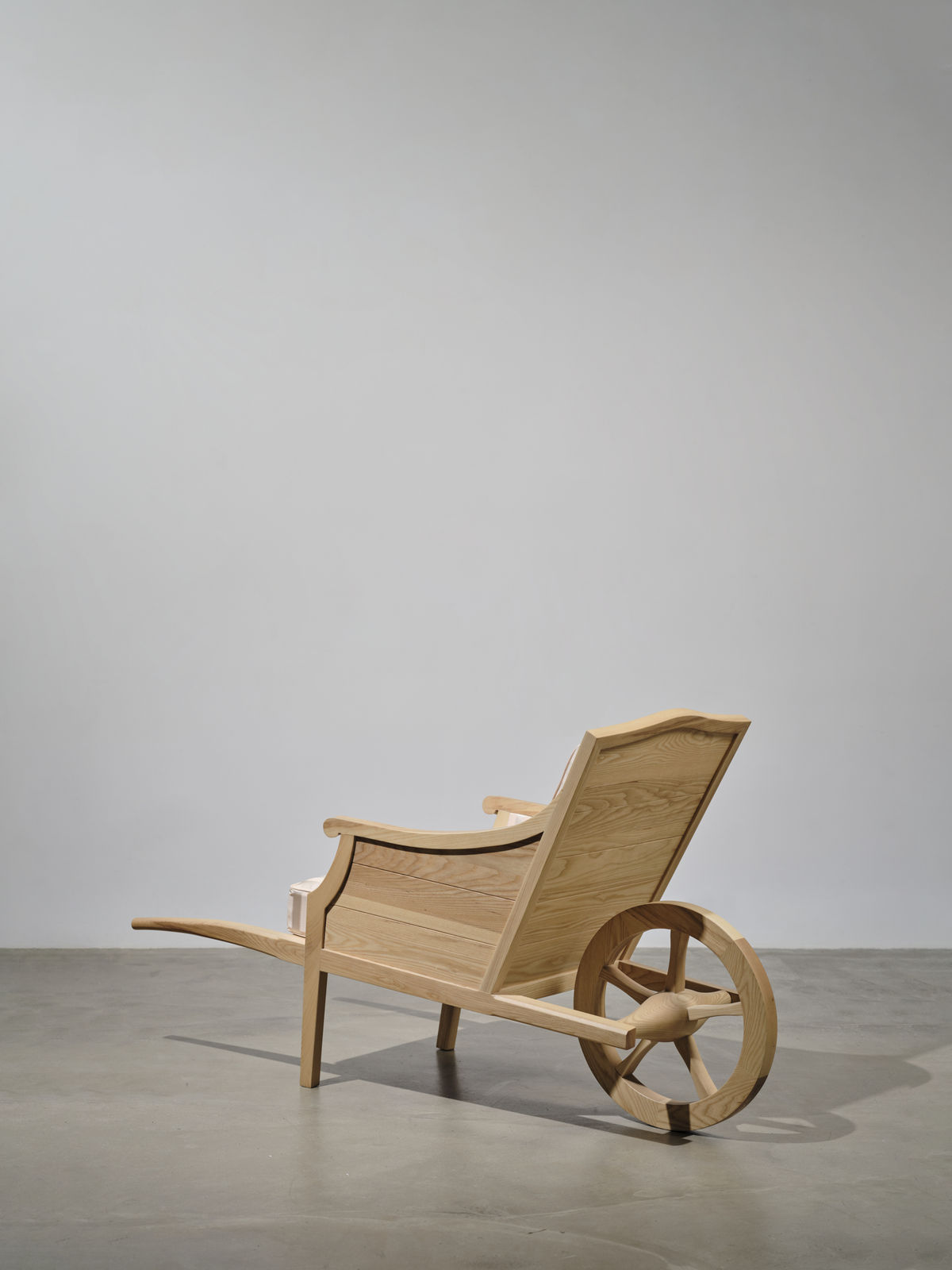
Fauteuil Ceci n'est pas une brouette, Ca. 1996
« Subversive, ethical, visionary, political, humorous, poetic: that is how I see my duty as a creator. » Philippe Starck
Works
-
 Chaise pliante Mrs. Frick
 -
Fauteuil Mister Bliss


Biography
Fauteuil Ceci n'est pas une brouette, Ca. 1996
Press
-
Philippe Starck: Le Boudoir de Charlotte
DAMN Magazine, 13 June 2022 -
Ketabi Bourdet: L'art et le design réunis
Marie Claire Maison, 1 November 2022 -
Philippe Starck a de nouveau la cote
Béatrice de Rochebouët , Le Figaro, 20 January 2023 -
Philippe Starck : son mobilier clin d'œil à la science-fiction exposé à Paris
Anouk Sarfati, AD Magazine, 20 January 2023 -
Il fotografo e il designer Un passo a due nell’arte
Silvia Nani, Corriere della Sera, 21 January 2023 -
KETABI BOURDET PRESENTS ‘UBIK’, A RETROSPECTIVE OF PHILIPPE STARCK’S WORK
Rosa Bertoli, Wallpaper*, 24 January 2023 -
Philippe Starck et le don d’« ubikuité »
Véronique Lorelle, Le Monde, 25 January 2023 -
Starck et les années 1980
Emmanuelle Graffin, In Interiors, 26 January 2023 -
In a Philippe Starck Retrospective, The Designer’s Early Work Reads As Both Vintage and Prescient
Deborah Shapiro, Sight Unseen, 30 January 2023 -
KETABI BOURDET PRESENTS THE EXHIBITION PHILIPPE STARCK
Emily Leung & Nikey Cheng, Sphere Art, 31 January 2023 -
« Ubik « et Starck, un design uchronien
Cécile Papapietro-Matsuda, Intramuros Paris, 16 February 2023 -
Philippe Starck : un marché du design en devenir
Judith Benhamou, Les Échos, 5 April 2023 -
La nouvelle Starck Mania
Marie Farman, Les Echos Week-end, 7 April 2023 -
Philippe Starck, Facétieux, original et inattendu
Elien Haentjens, Collect Arts Antiques Auctions, 1 May 2023 -
A STARCK IS BORN
Isabelle Soing, Marie Claire Maison, 16 May 2023 -
Le design se porte bien à Bâle
Armelle Malvoisin, Le Quotidien de l'Art , 14 June 2023 -
À Bâle, le design retrouve son salut avec de belles signatures
Béatrice de Rochebouët, Le Figaro, 16 June 2023 -
Le meilleur de Design Miami/Basel 2023
Aurore de Granier, Milk Decoration, 5 July 2023 -
Design Miami / Basel 2023: хиты продаж. Обзор Марины Ширской
Марина Ширская (Marina Shirskaya), Interior+Design, 20 July 2023 -
LIGHT MY FIRE, ENFLAMME LA GALERIE KETABI BOURDET
Marine Mimouni, ACUMEN, 28 July 2023 -
VOLUME FLUIDO
Elena Dallorso, AD 100 ITALIA, 11 January 2024 -
meet MAZE, the new collectible salon stepping in after design miami/basel's cancellation
Thomai Tsimpou, DESIGNBOOM, 29 May 2025 -
A Basilea debutta una nuova fiera di design dentro una straordinaria chiesa sconsacrata
Prende il posto di Design Miami Basel, nel mercato del design da collezione, la fiera boutique MAZE Design Basel, che si tiene in una chiesa neogotica di Basilea ed è promossa dal gruppo che già organizza eventi da Gstaad a BarcellonaCristina Masturzo, Artribune, 10 June 2025 -
Inside MAZE Design Basel the city's new design fair
With only 11 exhibitors and the backdrop of a Swiss Gothic Revival church, MAZE Design Basel is a new intimate art fair for those in the knowBrian Ng, Wallpaper Magazine, 23 June 2025 -
Design de collection : les galeries françaises échappent aux tensions commerciales
Les galeries françaises dominent le secteur de ces pièces uniques ou en série très limitée, qui échappent aux droits de douane et atteignent des records aux enchères.Martine Robert, Les Echos, 23 June 2025 -
A.R. Penck and Philippe Starck: A Radical Dialogue of Objects at Ketabi Bourdet
Rare ceramics by A.R. Penck meet radical designs by Philippe Starck at Ketabi Bourdet Gallery, Paris, from September 4–27.Laurent Moïsi, Whitewall, 2 September 2025 -
Philippe starck exhibition in paris traces eco-design from housing to furniture and objects
Philippe Starck exhibition turns eco-design into lived experienceThomai Tsimpou , Designboom, 2 February 2026 -
Nie przegap! Philippe Starck, dom DIY i eko-design w Paryżu
W paryskiej galerii Ketabi Bourdet można zobaczyć wystawę „Philippe Starck. The Spirit of the Forest”, poświęconą jednemu z najważniejszych współczesnych projektantów, która skupia się przede wszystkim na jego wyjątkowej relacji z naturą.MG, Labe, 2 February 2026 -
Вышли из леса: экологическая ответственность от Филиппа Старка
Philippe Starck. The Spirit of the Forest — выставка о том, как дизайн стал частью зеленой повестки задолго до появления Греты Тунберг.A-NEWS, 4 February 2026 -
Ketabi Bourdet Hosts ‘Philippe Starck, The spirit of the forest’ Exhibition
A Paris showcase tracing his career‑long dialogue with nature.Zoe Leung, HYPEBEAST, 5 February 2026 -
Philippe Starck - L'esprit de la forêt
Télérama, 11 February 2026 -
A Look Back at Starck’s Nature-Loving 90s Era
The Grand Tourist, 12 February 2026 -
자연을 호출해온 디자이너, 필립스탁의 궤적을 조망하다
2026년 1월 30일부터 2월 28일까지, 파리의 케타비 부르데Ketabi Bourdet 갤러리에서는 필립 스탁의 ‘숲의 정령 The Spirit of the Forest’ 전시가 열린다. 이번 전시는 1980년대 후반부터 2000년대에 이르기까지 자연을 대하는 그의 독특한 방식을 설명하고, 어떻게 이를 오브제로 번역해왔는지 구체적인 작품과 프로젝트를 통해 조명한다. 제목에서 느껴지듯, 핵심은 숲의 정신에 있다. 자연을 디자인의 모티브로 차용하는 것을Yang Yun-jeong, Design Press, 19 February 2026 -
EIGHTIES LA NOUVELLE DONNE
L’engouement pour le mobilier vintage Mid-Century, scandinave, italien ou encore français finissant par s’étioler, c’est désormais le design des années 1980 qui électrise collectionneurs avisés, jeunes galeristes et influenceurs.Cédric Saint, André Perrin, Bazaar Intérieurs, 12 March 2026




Exhibitions
-
Philippe Starck, L'esprit de la forêt
KETABI BOURDET - 22, PASSAGE DAUPHINE 75006 30 January - 28 February 2026Design écolo par correspondance ? Philippe Starck, créateur « écolo » a très tôt intégré la nature dans ses créations. Il est lui-même un homme de la nature, entouré de...Read more -
PENCK / STARCK
Ketabi Bourdet - 22, Passage Dauphine 75006 Paris 4 - 27 September 2025C’est la première fois en France qu’une exposition met en lumière les céramiques de Penck, un pan encore largement méconnu de son œuvre, et pourtant essentiel. Ces pièces trouvent leur...Read more -
Nouvelles Résolutions Vol.II
Ketabi Bourdet - 22, passage Dauphine 75006 Paris 28 November - 21 December 2024AVEC DES OEUVRES DE :Read more
PAULINE D’ANDIGNÉ
IDIR DAVAINE
GUY DE ROUGEMONT
JO FISH
ELIZABETH GAROUSTE
AUDREY GUTTMAN
ARTHUR LEMONIER
INÈS LONGEVIAL
PAOLO PALLUCCO
BRUNO ROUSSEAUD
ARA STARCK
PHILIPPE STARCK
JULIEN SAUDUBRAY
JEAN-MICHEL WILMOTTE -
Drapé
Ketabi Bourdet - 22, passage Dauphine, 75006 Paris 4 April - 3 May 2024Un cauchemar. C’est ce qu’un drapé inspire à tout apprenti dessinateur confronté à la cascade d’ombres que la lumière sculpte sur le textile. Mais malgré la difficulté technique de sa...Read more -
Light my fire !
Ketabi Bourdet - 22, passage Dauphine, 75006 Paris 29 June - 28 July 2023Antithétique parce que créateur et destructeur, le feu est mis à l’honneur sous toutes ses formes dans Light my Fire . Il y est domestiqué par Élisabeth Garouste qui forge...Read more -
Sculptures
Set design by Bruno Rousseaud 12 - 18 June 2023The desire to present this ensemble came after the visual shock of the exhibition of Thierry Barbier Mueller’s chair collection staged by Robert Wilson at the MUDAC in Lausanne last...Read more -
Philippe Starck, Ubik
Ketabi Bourdet - 22 passage Dauphine, 75006 Paris 19 January - 18 February 2023Tout le monde connaît Philippe Starck ! Lui qui a tout fait, des pâtes, des brosses à dents, des palaces, des avions, du riz, des megayachts, du parfum, des maisons...Read more


Bibliography
Fauteuil Ceci n'est pas une brouette, Ca. 1996
Enquire